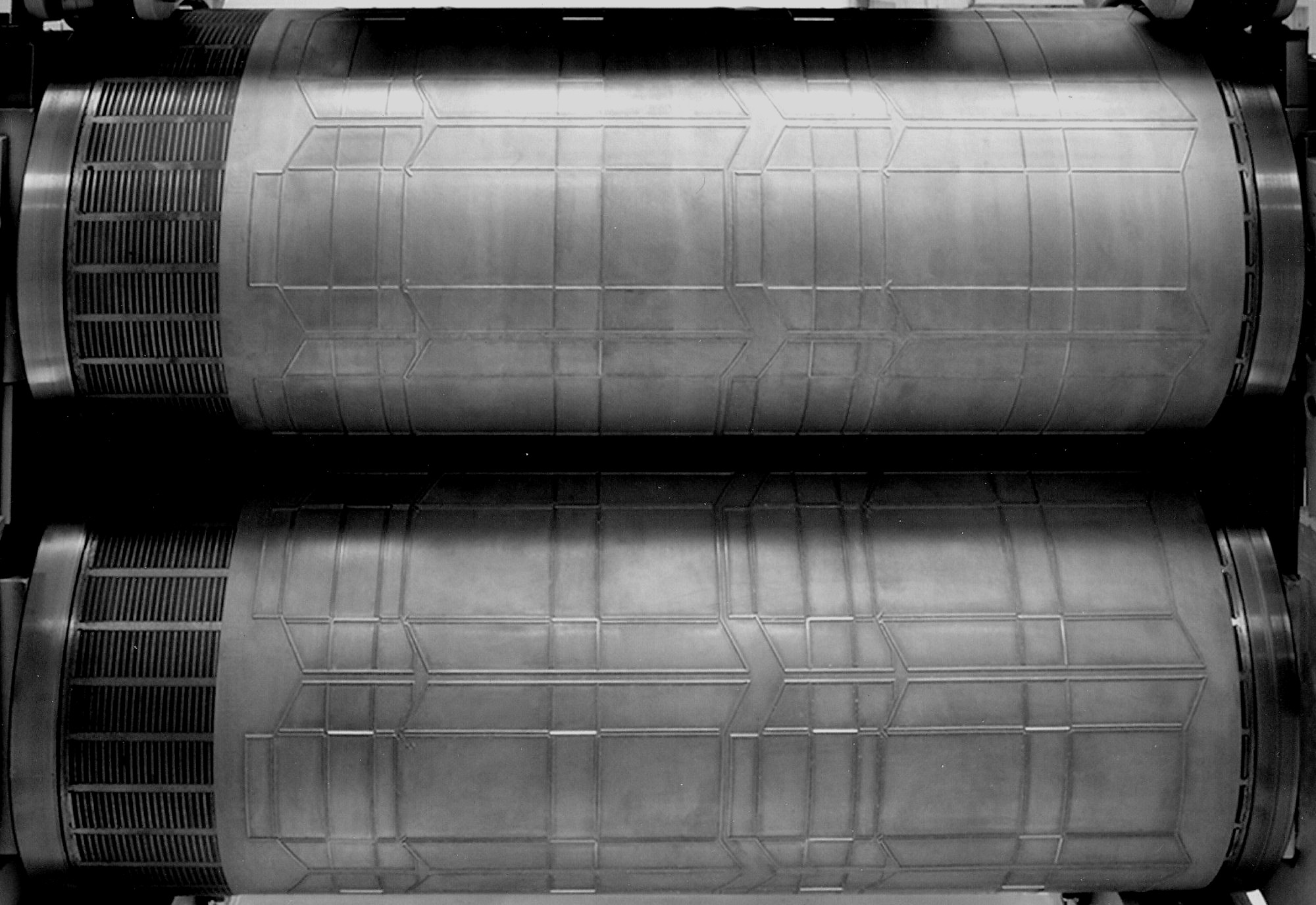
The Difference
The Xynatech Process.
Xynatech eliminates every source of variability in the conventional process. The result is a die that's more accurate, more consistent, and longer-lasting than anything etched and machine/hand sharpened. Here's exactly how it works.
01
XynaCAD — Automated Die Geometry
Proprietary software generates die geometry automatically from the carton design file. No manual CAD translation.
→
02
Direct Photo-Plotted Imaging
XynaCAD plots directly to plate. The result is a pressure cutting die with precision no machine-sharpened die can match.
→
03
Proprietary Chemical Etching
Environmentally compliant process developed by Xynatech. Zero secondary mechanical machining.
→
04
Tested, Verified, Shipped
Every die tested and verified before it ships. Mounted on magnetic cylinders. Runs 8pt–30pt paperboard.
Why it matters: XynaCAD plots cutting geometry directly from your CAD file with micron-level accuracy. The result is the most precise starting point in the rotary flexible die industry.
The difference
Why it matters: Direct plotting eliminates the translation layer between design and plate. What XynaCAD generates is exactly what gets imaged — no approximation, no rounding, no human error.
The difference
Why it matters: Conventional dies require secondary machining to finish cutting lands — another mechanical step, another variable. Xynatech's etching produces finished lands directly. No competitor can replicate it.
The difference
The result: Xynatech ships dies after cutting the carton with a proof press. Every die is proven before it leaves the building. First-run accuracy no competitor can match.
Trade Secret: The complete Xynatech Process is held as a proprietary trade secret. Pierson Kang developed it over decades. No competitor can replicate it. The industry said it wouldn't work. It works.
The Industry Standard vs. Xynatech
Competitors
Still Do It
The Old Way.
The conventional flexible die process hasn't changed in decades. After chemical etching, competitors machine or hand finish mill their dies. Xynatech's pressure cutting process is fundamentally different: etched, not machined, with special profile cutting lands that compress paperboard to clean rupture. No land contact.
Xynatech
- ✓XynaCAD — automated geometry, no human error
- ✓Direct photo-plotting — micron accuracy
- ✓Proprietary etching — custom designed for tool steel with environmentally friendly chemicals
- ✓First-run accuracy no competitor can match
- ✓Longest die life
Conventional Manufacturers
- ✕Manual CAD translation
- ✕Chemical etching with machine/hand finishing
- ✕Secondary machining of cutting lands
- ✕High customer return rate
- ✕Shorter die life — land contact causes abrasion